

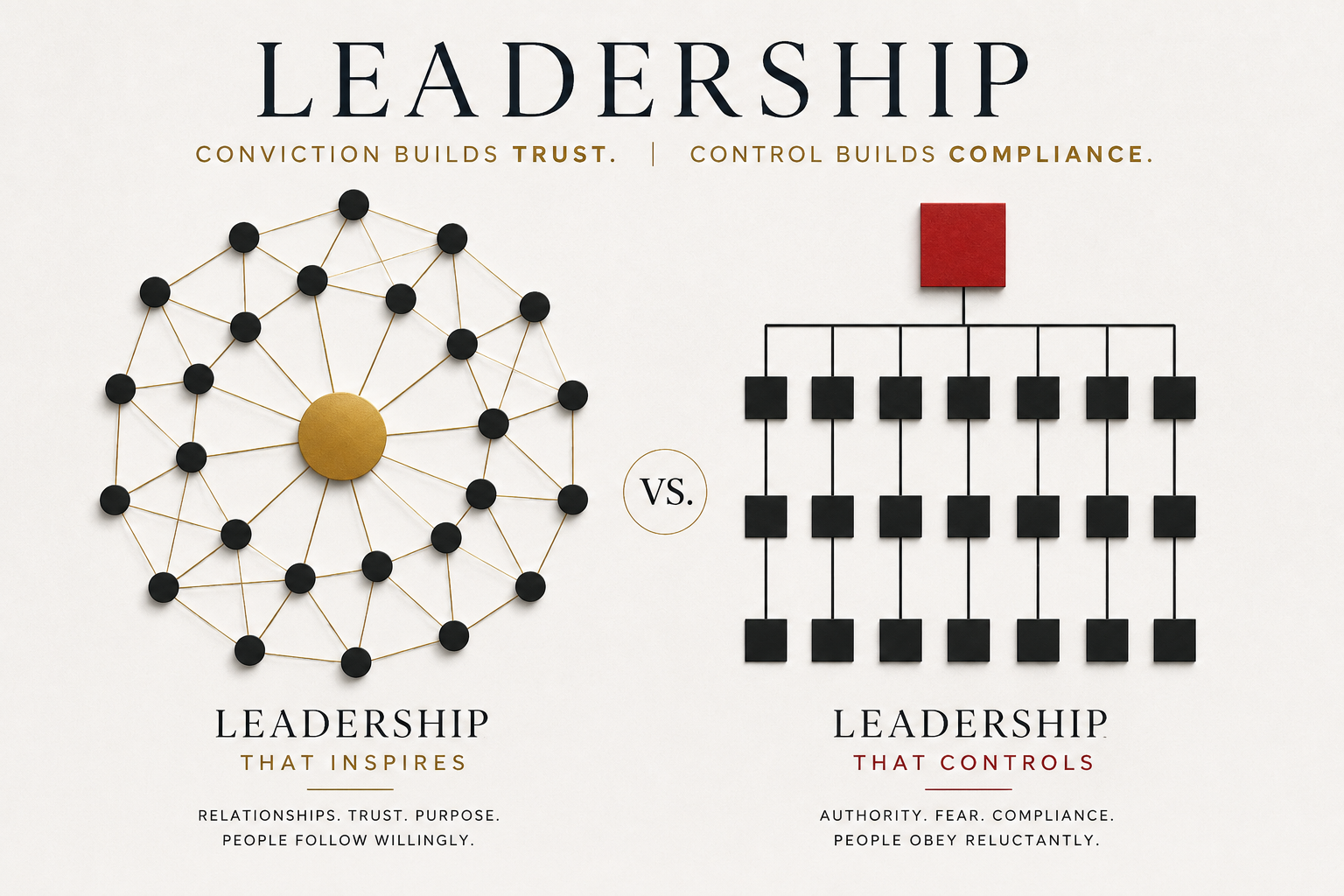
Leadership has become one of the most discussed topics in business. Open any bookstore or browse any executive seminar, and you will find countless leadership styles. There are transformational, servant, democratic, transactional, situational, visionary, authoritarian, and many others. Each has its advocates, each has its critics, and each can be effective under the right circumstances.
Rather than debating styles, perhaps the more meaningful discussion is about attributes.
Styles evolve. Circumstances change. Industries transform. But certain attributes consistently distinguish leaders who build enduring organizations from those who simply occupy positions of authority.
One attribute, in particular, appears again and again. It appears not necessarily by name, but by its effects. Some call it humility. Others describe it as emotional intelligence, self-awareness, or servant leadership. Whatever label we choose, it is less about the word itself and more about the characteristics it produces.
Consider first the leader whose greatest strength is conviction.
This leader possesses a clear vision and is willing to make difficult, even unpopular, decisions when they serve the long-term interests of the organization. Their conviction is not rooted in ego but in purpose. Because they have invested in authentic relationships with their partners, employees, and stakeholders, difficult decisions are understood, even when they are not immediately welcomed.
That distinction matters.
People will often accept difficult outcomes when they trust the intentions of the person making the decision. Authentic relationships create the credibility that allows leadership to move an organization both operationally and aspirationally.
Contrast this with the leader whose authority becomes the objective.
Here, conviction is replaced by control. Decisions are driven not by vision but by the desire to command. Leadership becomes an exercise in enforcing compliance rather than inspiring commitment. While this approach may produce short-term execution, it often comes at the expense of trust, innovation, and open communication.
Organizations led through fear eventually become organizations where people stop offering ideas, avoid calculated risks, and protect themselves rather than the mission.
Control may produce obedience.
It rarely produces excellence.
The distinction between these two approaches becomes evident long before strategic initiatives are launched or operational changes are implemented. It begins with how people experience their leader every day.
History provides compelling examples of both approaches.
The following examples are offered with great respect for the individuals involved. Leadership is complex, and no person’s legacy can be reduced to a single characteristic. These examples are intended only to elevate discussion by examining documented leadership approaches and their organizational outcomes.
Abraham Lincoln is widely recognized not only for his conviction during one of America’s greatest crises but also for his willingness to surround himself with advisors who challenged his thinking. Rather than demanding agreement, he welcomed opposing viewpoints before making difficult decisions. His confidence was not diminished by listening; it was strengthened by it.
In the business world, Satya Nadella inherited Microsoft at a pivotal moment. Rather than leading through authority alone, he intentionally fostered a culture centered on learning, collaboration, and empathy while still making bold strategic decisions that reshaped one of the world’s largest companies.
Conversely, history also reminds us that organizations built around excessive control often struggle to sustain healthy cultures. Uber’s early years under Travis Kalanick demonstrated extraordinary growth and innovation, but the company’s well-documented cultural challenges ultimately required significant organizational change before it could continue its evolution.
Even Steve Jobs offers an important lesson. His leadership demonstrates that great leaders are capable of growth. His first tenure at Apple reflected a far more rigid leadership style than the one he displayed after returning to the company years later. Experience refined conviction into maturity, proving that leadership attributes can evolve.
These examples suggest that enduring leadership is less about commanding others and more about creating an environment where people willingly commit themselves to a shared vision.
Perhaps that is why the following attributes appear so consistently among organizations that endure.
| Leadership Attribute | Operational Impact | How It Elevates Partners |
|---|---|---|
| Intellectual Humility | Better decisions through broader perspectives | Partners feel heard, respected, and valued |
| Conviction | Decisive action during uncertainty | Creates confidence and stability |
| Authenticity | Builds organizational trust | Encourages transparency and stronger relationships |
| Accountability | Raises performance standards | Establishes mutual respect and ownership |
| Curiosity | Drives innovation and continuous improvement | Invites participation and shared problem-solving |
Notice that none of these attributes require a larger budget. None require new technology. None require favorable economic conditions. They require only the discipline to place purpose above ego and relationships above authority.

Leadership is often portrayed as something extraordinary, reserved for those with exceptional charisma or remarkable talent. In reality, some of the most influential leadership attributes cost nothing to practice.
They cannot be purchased. They cannot be delegated.
Yet over time they create organizations where trust becomes a competitive advantage, difficult decisions become easier to navigate, and people choose commitment over compliance. Perhaps that is the greatest lesson of all. Leadership is not measured by how tightly one holds authority.
It is measured by how effectively one elevates others.
Keymark Advisory
Ideas that outlast markets.