

For Immediate Release
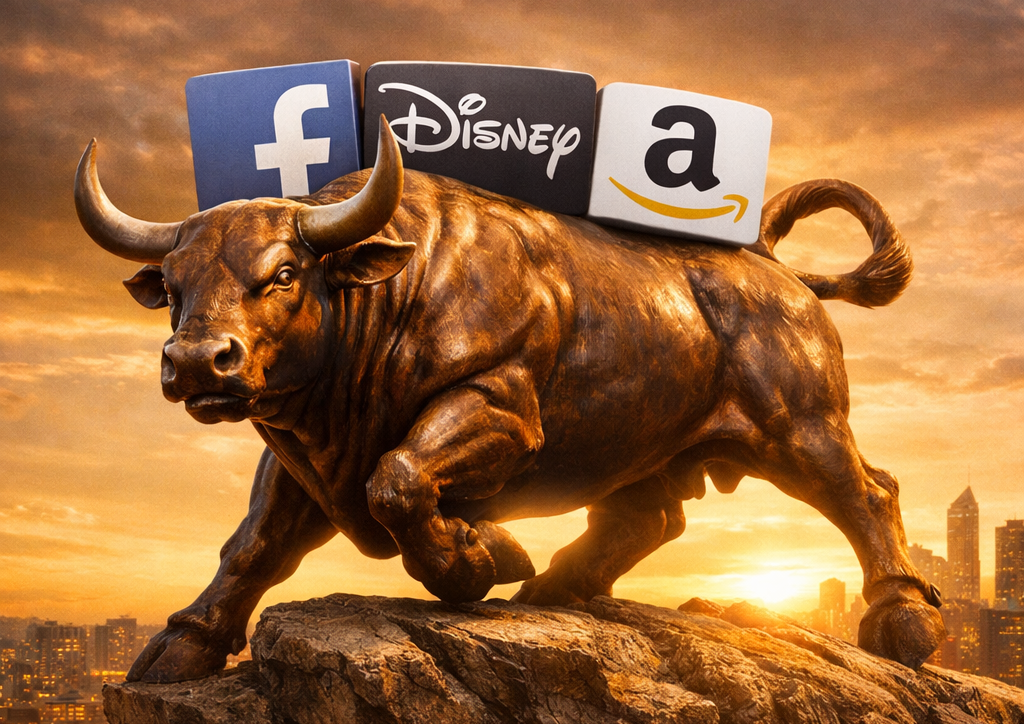
Dallas, Texas – April 18, 2026 – In the history of business, transformative value has often been created not by caution, but by conviction. The most consequential acquisitions are rarely obvious at the time they are made. They require a willingness to absorb uncertainty, challenge consensus, and act decisively when others hesitate. Below are three well-documented examples where bold acquisitions reshaped industriesand rewarded those willing to take the risk.
1. Facebook Acquires Instagram (2012)
In 2012, Facebook acquired Instagram for approximately $1 billion, a price widely criticized at the time for a company with just 13 employees and no revenue.
Why it was bold and risky:
- The valuation appeared disconnected from fundamentals.
- Mobile monetization strategies were still unproven.
- There was significant skepticism about whether a photo-sharing app could sustain long-term growth.
Why it worked:
- Facebook recognized early the structural shift toward mobile-first engagement.
- Instagram’s user growth and engagement metrics signaled deep network effects.
- Facebook preserved Instagram’s brand autonomy while integrating its advertising infrastructure.
Today, Instagram is a central pillar of Meta’s revenue engine, validating the thesis that user attention—when scaled can be monetized effectively over time.
2. Disney Acquires Pixar (2006)
When Disney acquired Pixar for $7.4 billion in stock, it was a strategic pivot at a time when Disney’s own animation division was in decline.
Why it was bold and risky:
- Pixar had a strong independent identity and culture that could have clashed with Disney.
- The deal effectively placed creative control in the hands of Pixar leadership, including Steve Jobs and John Lasseter.
- Disney was betting its future animation success on an external studio.
Why it worked:
- Disney embraced, not absorbed, Pixar’s creative culture.
- Leadership integration was handled with precision, allowing Pixar’s innovation to scale across Disney Animation.
- The acquisition revitalized Disney’s storytelling pipeline, leading to a new era of global hits.
The result was not just financial return, but the reestablishment of Disney as a dominant force in animation.
3. Amazon Acquires Whole Foods Market (2017)
Amazon’s $13.7 billion acquisition of Whole Foods marked a decisive move into brick-and-mortar retail, an area many believed contradicted its core digital strategy.
Why it was bold and risky:
- Amazon entered a low-margin, operationally complex industry.
- The integration of a premium grocery brand with a technology-driven logistics company posed cultural and operational challenges.
- Analysts questioned whether Amazon could materially disrupt physical retail.
Why it worked:
- Amazon leveraged Whole Foods as a distribution network for last-mile delivery.
- It integrated Prime membership benefits into physical retail, enhancing customer loyalty.
- The acquisition accelerated Amazon’s omnichannel strategy, blending digital convenience with physical presence.
The move signaled Amazon’s long-term vision: ownership of the entire consumer experience, from digital interface to physical fulfillment.
The Common Thread
Across these acquisitions, several patterns emerge:
- Contrarian Timing: Each deal was executed when uncertainty was high and consensus was skeptical.
- Strategic Clarity: The acquirers had a clear vision of how the target fit into a broader transformation.
- Execution Discipline: Success depended not just on the acquisition itself, but on integration and operational follow-through.
Bold acquisitions are not reckless, they are calculated. They require conviction grounded in insight, and the willingness to act before the opportunity becomes obvious.
The Opportunity Cost of Hesitation
For every Facebook, Disney, or Amazon, there were others who evaluated the same opportunities and chose restraint. In many cases, those decisions were rational based on available data. Yet history tends to reward those who can see beyond the immediate horizon.
Opportunities of this nature are infrequent. They do not arrive labeled as “obvious,” nor do they wait indefinitely for consensus to form. They present themselves briefly, often disguised as risk.
Some recognize them. Others pass.
And in retrospect, the difference is measured not just in returns, but in relevance.
When your opportunity comes, will you miss it?