

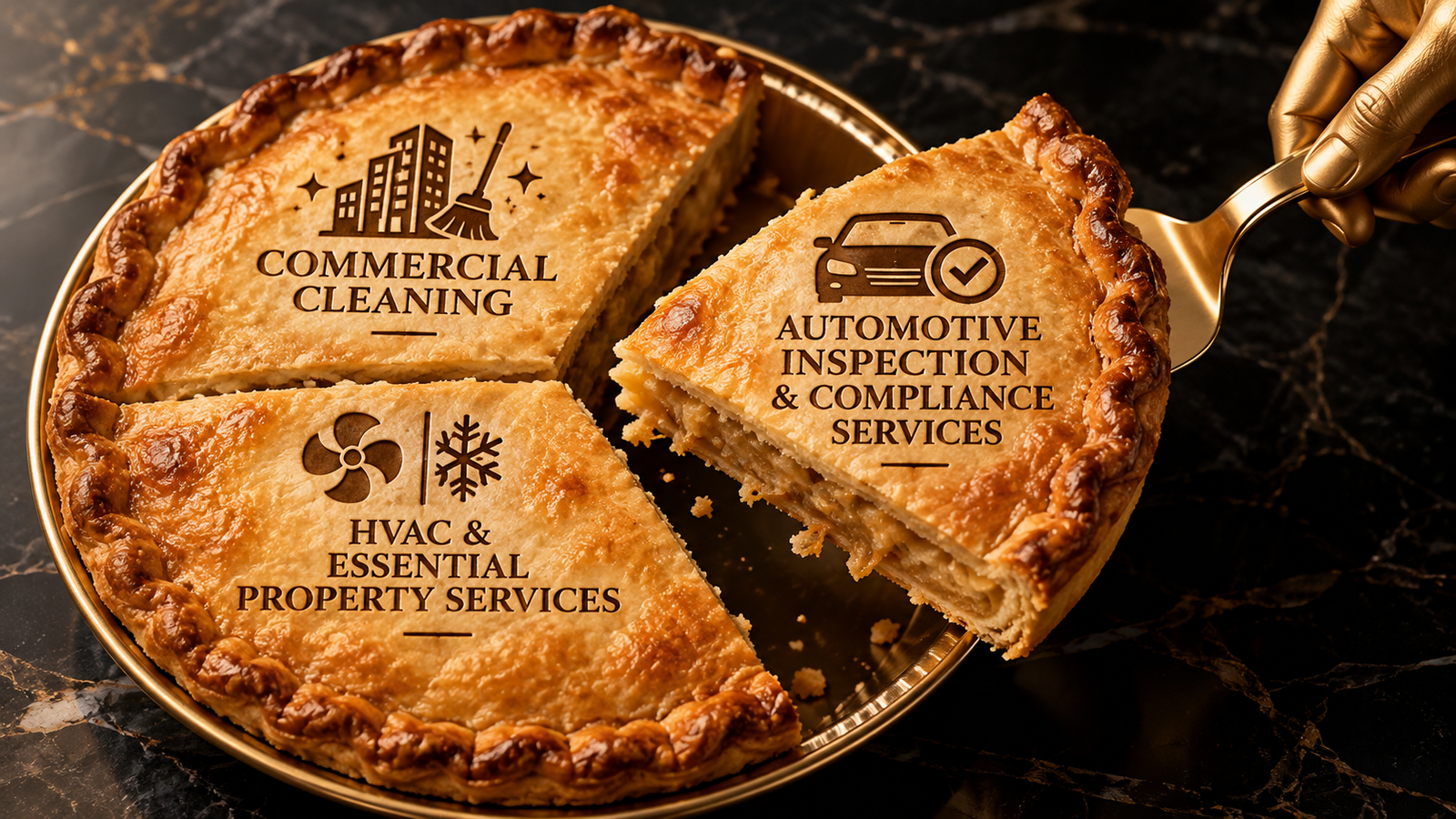
Why recurring demand, essential services, and operational stability are attracting attention in the small-business acquisition market.
The most compelling business opportunities aren’t always found in emerging industries or the latest market trends. Sometimes, they’re found in businesses that have been operating quietly for years, serving established customers, generating consistent revenue, and meeting needs that don’t disappear when economic conditions change.
For entrepreneurs looking to acquire a business, and owners considering an eventual sale, that distinction matters.
A company doesn’t necessarily need explosive growth to become an attractive acquisition. In many cases, buyers are more interested in the quality of its revenue, the reliability of its customer base, and whether its operations can continue successfully under new ownership.
The ability to generate predictable cash flow, maintain manageable operating costs, and demonstrate a history of customer demand can make an established business particularly interesting to buyers. For existing owners, those same characteristics can create opportunities to improve valuation, strengthen negotiating leverage, and prepare for a successful exit.
Three industries illustrate how these fundamentals can translate into opportunities for both business growth and ownership transitions.
1. Commercial Cleaning and Facility Maintenance: The Value of Recurring Contracts
Commercial cleaning and facility maintenance businesses have an advantage that many other service industries struggle to establish: the potential for recurring, contract-based revenue.
Office buildings, medical facilities, retail properties, schools, and commercial spaces require ongoing cleaning and maintenance. These services are not typically one-time purchases. They are operational necessities that can create continuing relationships between service providers and their customers.
For an established cleaning company, a portfolio of recurring commercial contracts can provide a foundation for consistent revenue and more predictable scheduling. It can also create opportunities for growth without requiring an entirely new business model.
An operator serving several commercial properties may expand by adding nearby accounts, introducing specialized cleaning services, or acquiring smaller competitors operating within the same geographic market. As customer density increases, the business may be able to improve scheduling efficiency, employee utilization, and purchasing economics.
From an acquisition perspective, these characteristics can make an established commercial cleaning operation attractive. A buyer may be acquiring more than equipment and a customer list. The transaction may include ongoing client relationships, trained personnel, established operating procedures, and a business with a demonstrated record of service delivery.
However, the quality of those relationships matters. Buyers should examine contract terms, customer concentration, employee retention, operating margins, and the degree to which the business depends on its current owner.
For owners considering a sale, strengthening these areas before entering the market can materially influence how prospective buyers evaluate the company.
The larger opportunity lies in turning a service business into a transferable operating platform, one capable of maintaining its customer relationships and performance through an ownership transition.
2. HVAC and Essential Property Services: Growth Built Around Ongoing Demand
Heating, ventilation, air conditioning, and related property services occupy another important position in the small-business acquisition market.
Buildings require functioning mechanical systems. Equipment ages, components fail, and property owners must decide whether to repair, maintain, or replace essential systems. These needs create continuing opportunities for businesses capable of delivering reliable technical services.
What makes an established HVAC company particularly interesting is the potential to develop multiple sources of revenue within the same customer relationship.
A company may begin by providing installation or emergency repair services, then expand into preventative maintenance agreements, recurring inspections, system upgrades, and replacement work. Commercial customers may require scheduled service throughout the year, while residential customers can represent opportunities for long-term relationships through maintenance programs.
For buyers, a well-operated HVAC business may offer an existing customer base, skilled technicians, established supplier relationships, and the infrastructure needed to deliver services immediately after acquisition.
The growth opportunity often involves improving what is already in place. Expanding maintenance agreements, developing stronger customer retention programs, adding technicians, or acquiring complementary service providers can create opportunities to increase revenue and operational efficiency.
The industry has also attracted acquisition interest from companies seeking to expand their geographic presence and service capabilities. Established operators with dependable management, diversified customers, and recurring maintenance revenue may be especially relevant to these strategies.
Still, not every HVAC business represents the same opportunity. Labor availability, licensing requirements, equipment costs, seasonal demand, and owner dependence can significantly affect the economics of an acquisition.
For business owners considering an exit, the ability to demonstrate stable earnings, documented operations, and customer relationships that extend beyond the owner’s personal involvement can make a meaningful difference.
An HVAC business becomes particularly compelling when its value rests not only on the technical expertise of its founder, but on an operating structure that another owner can successfully continue and expand.
3. Automotive Inspection and Compliance Services: The Opportunity in Established Demand
Some of the more overlooked acquisition opportunities exist in businesses built around routine, necessary transactions rather than discretionary purchases.
Automotive inspection and compliance services offer an example.
In markets where vehicle safety inspections, emissions testing, or other compliance procedures are required, authorized service providers may benefit from a recurring need among vehicle owners and commercial operators.
Unlike businesses that must continually create demand for their products, these operations can serve customers who are responding to established vehicle maintenance or regulatory obligations.
That distinction can be valuable, although the specific opportunity depends heavily on local laws, the services a business is authorized to perform, and the stability of the applicable regulatory environment.
For an established inspection business, a convenient location, recognized customer relationships, efficient service procedures, and consistent transaction volume may provide a foundation for ongoing operations.
From a buyer’s perspective, an existing operation can offer advantages over starting from the ground up. Depending on the transaction, a buyer may acquire established facilities, inspection equipment, operating procedures, customer goodwill, and personnel familiar with the requirements of the business.
These characteristics can reduce some of the uncertainty associated with launching a new enterprise, although licenses, permits, and regulatory approvals may need to be obtained or reissued under new ownership.
There may also be opportunities to expand beyond a single service. Where permitted, complementary offerings such as vehicle maintenance, diagnostics, fleet-related services, and other automotive support functions can provide additional revenue opportunities.
For existing owners, the strength of the business lies in demonstrating how its operations perform over time. Consistent transaction records, documented cash flow, operating efficiency, and a clear understanding of the local competitive environment are important factors in preparing for a sale.
Regulatory exposure deserves particular attention. Vehicle inspection requirements can change, sometimes significantly, and a buyer must understand how those changes affect future demand.
This makes due diligence especially important in states where inspection programs are being revised.
Ultimately, the acquisition opportunity is not simply the ability to perform vehicle inspections. It is the possibility of acquiring an established automotive service operation with a documented history, existing market presence, and a business model that a new owner can evaluate and potentially develop further.
For the right buyer, a smaller, specialized operation may offer an accessible entry point into business ownership, particularly when the company has established earnings and opportunities to strengthen or diversify its services.
What Makes These Businesses Attractive to Buyers?
Commercial cleaning, HVAC services, and automotive inspection businesses operate in different markets, but they share characteristics that can make established companies worth examining.
Each serves practical customer needs. Each may offer opportunities for repeat business. And each can potentially grow through improved operations, stronger customer relationships, complementary services, or strategic acquisitions.
But the existence of demand does not automatically make a company a good investment.
The real value becomes clearer when buyers examine the quality of earnings, the durability of customer relationships, operating costs, management requirements, competitive position, and the company’s ability to function without excessive dependence on its current owner.
A business with a long operating history and consistent cash flow may be more attractive than a larger company whose revenue is unpredictable or whose operations depend entirely on one individual.
Similarly, an owner who has invested in accurate financial reporting, documented processes, and operational continuity may be in a stronger position when negotiating with prospective buyers.
The common thread is transferability.
A buyer needs confidence that the business can continue producing value after the transaction closes. An owner preparing to sell needs to demonstrate why that confidence is justified.
The Opportunity for Buyers and Sellers
For prospective buyers, acquiring an established business can provide a path to entrepreneurship without having to build every aspect of an operation from the beginning.
Existing customers, operating systems, personnel, facilities, and a documented financial history can offer a starting point for future growth.
For sellers, the same transaction represents an opportunity to realize value from years of work, investment, and relationship building.
The strongest opportunities emerge when both sides understand what is being transferred and what will be required to sustain the business after the sale.
In many cases, that means looking beyond headline revenue figures and asking more important questions about profitability, operating stability, customer demand, and the potential for future development.
The businesses most worth considering are not always the ones receiving the greatest attention.
Often, they are the ones that have already demonstrated an ability to serve a market consistently, generate earnings, and operate within an established industry.
For buyers and sellers alike, recognizing those characteristics is an important first step toward identifying opportunities that can create value long after an acquisition is completed.
At Keymark Advisory, our focus is on helping business owners and prospective buyers evaluate opportunities through the lens of business fundamentals, transaction readiness, and long-term value.
Whether the objective is acquiring an established operation, positioning a company for growth, or preparing for an eventual sale, understanding what makes a business transferable is essential to making informed decisions.